Private Pilot vs. Commercial Pilot Certificate: What Changes in 2026
You are standing at a fork. Down one path is the private pilot certificate, the classic way to fly for the love of it. Down the other is the commercial pilot certificate, which opens the door to getting paid. Pick the wrong one for your goals and you can spend months and real money on training that does not move you toward what you actually want.
This guide lays the two certificates side by side. We cover what each one allows, what changes in your training, and how to decide where to start. We keep the FAA details general and point you to the source, because the rules are the final word and a short conversation with us can fit them to your situation.
What each certificate lets you do
The simplest difference is the purpose of your flying. A private pilot flies for personal reasons: trips, weekend flights, time with friends and family. The private certificate allows noncommercial flying, and it comes with operating rules and limits that your instructor explains in training.
A commercial pilot may fly for pay in certain operations. That is a real change, because it turns flying from a pastime into a possible profession. It does not mean every kind of paid flying or every airline job is open to you. Those depend on other rules, other certificates, and the employer.
The FAA describes the certificate types on its pilot certificate comparison page, which is a good place to start before you decide.
Side by side: how the two certificates compare
The table below shows the main differences at a glance. We leave out exact numbers on purpose, so you always check the rule text for the current figures.
| Topic | Private Pilot Certificate | Commercial Pilot Certificate |
|---|---|---|
| Purpose of flying | Personal and noncommercial | Paid flying in certain operations |
| Where you start | You can start with no flying experience | Builds on earlier training |
| Training focus | Learning to fly safely and confidently | Precision and professional standards |
| Knowledge test | Yes | Yes, at a professional level |
| Practical test | Yes | Yes, held to a higher standard |
| Medical | Part of the picture before solo flight | A higher health standard applies to professional flying |
| Typical goal | Fly for fun and freedom | Build a flying career |
If you want to read about the commercial side in detail, our guides on commercial pilot requirements and commercial pilot license hours go further.
How the training feels different
Private training teaches you to fly the airplane safely and make good decisions as the pilot in command. You learn takeoffs, landings, navigation, and what to do when things do not go as planned. By the end you can take passengers on trips, and the freedom of that is a big part of the appeal.
Commercial training raises the standard. You refine what you already know, and the focus moves to precision and consistency. The maneuvers demand tighter control, and the examiner expects you to fly like someone who could do this for a living. You also learn to think about the airplane as a tool for work, with an eye on efficiency and professionalism.
For a closer look at the foundation, read our private pilot training overview, and see how the next step fits in the instrument rating program.
What changes in tests and medical
Both certificates involve a knowledge test and a practical test, and both follow the FAA’s Airman Certification Standards. The commercial level asks for deeper knowledge and tighter performance, and the examiner will probe your understanding more closely.
The medical piece also changes in importance. Flying professionally comes with a health standard that you should plan for early. Which medical you need depends on the flying you plan to do, so check the FAA’s guidance and talk with an aviation medical examiner. Our guide to the commercial pilot medical certificate explains how to plan it.
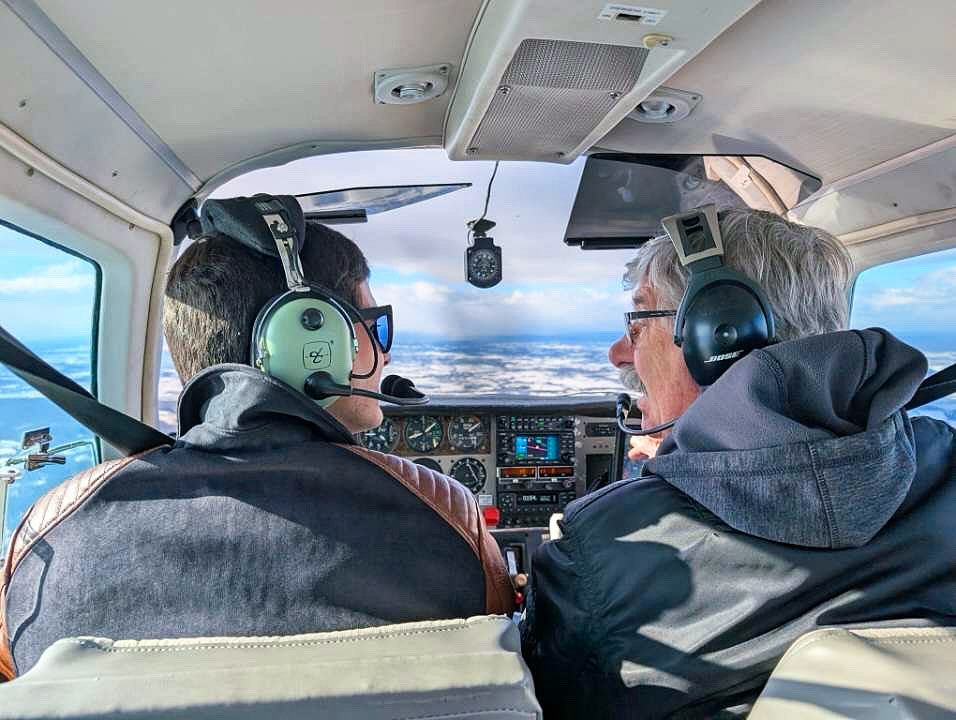
Who should choose which path
There is no wrong answer, only a right fit. Use these questions to find yours.
- Do you want to fly for the joy of it? The private certificate gives you the freedom to fly for pleasure and share the experience with others.
- Do you want to be paid to fly? The commercial certificate is a necessary step on that road.
- Are you not sure yet? Start with the private certificate. It is the foundation for everything that follows, and it gives you time to learn what you love.
- Do you already hold the private certificate? Then you can look at the next steps toward professional training with an instructor.
Many students begin with a discovery flight, which is an easy way to test the idea before committing. After that, the path usually runs from private, to instrument, to commercial, and for some pilots on to flight instructor training.
Two students, two goals, one starting point
Picture two new students who walk into the school on the same morning. The first wants to fly her family to the shore on summer weekends. The second wants to build toward a flying career. Both begin the same way: a first lesson, a plan, and a logbook.
For the first student, the private certificate is the finish line, and every lesson points at it. She can add ratings later if she wants more capability. For the second student, the private certificate is the first of several steps. He plans his instrument and commercial training from the start, so each flight counts toward more than one goal.
The lesson is that the starting point is shared, and the difference is the plan. A good plan costs nothing to make and can save a lot of repeated work. If you are not sure which student you are, that is a perfectly good thing to tell us. Many people arrive undecided, and a first conversation is often enough to sort out which direction feels right.
The cost of each step
Cost depends on how often you fly, how you learn, and how well you prepare. We do not publish a single number for either certificate. A regular lesson schedule and a clear plan usually keep you from repeating work. Contact us to talk through current rates and your budget, including payment and financing questions.
If you are weighing the long game, our post on how long it takes to become an airline pilot in Pennsylvania shows where each certificate fits on the larger map.
Frequently Asked Questions
What is the difference between a private and a commercial pilot license?
The private certificate is for noncommercial flying, while the commercial certificate lets you fly for pay in certain operations. The commercial level also asks for a higher standard in training and testing.
Do I need a private pilot certificate before a commercial one?
The commercial certificate builds on earlier training, and most students earn the private certificate first. Part 61 lists exactly what you must hold, and your instructor can explain how it applies to you.
Does a commercial certificate guarantee an airline job?
No. The commercial certificate is a step, not a guarantee. Airline careers depend on additional requirements and on the employer.
Can I get paid to fly with just a private certificate?
The private certificate is for noncommercial flying. If paid flying is your goal, talk with us about the commercial path and the rules that apply.
How long does each certificate take?
It depends on how often you fly and how you learn. A steady schedule helps, and we can talk through a realistic timeline for your situation when you contact us.
Which one should I start with?
If you are new to flying, start with the private certificate. A discovery flight is a good first step.
Choose your path with our team
Whether you want weekend freedom or a flying career, the first move is the same: a conversation about your goals. Tell us what you want from aviation, and we will help you decide which certificate to start with, what to schedule next, and how to fit lessons around your work, school, or family so your plan stays realistic. Contact us to choose your path.