1500 Hours: How Many Days, What Time It Is, and Why It's a Magic Number for Pilots

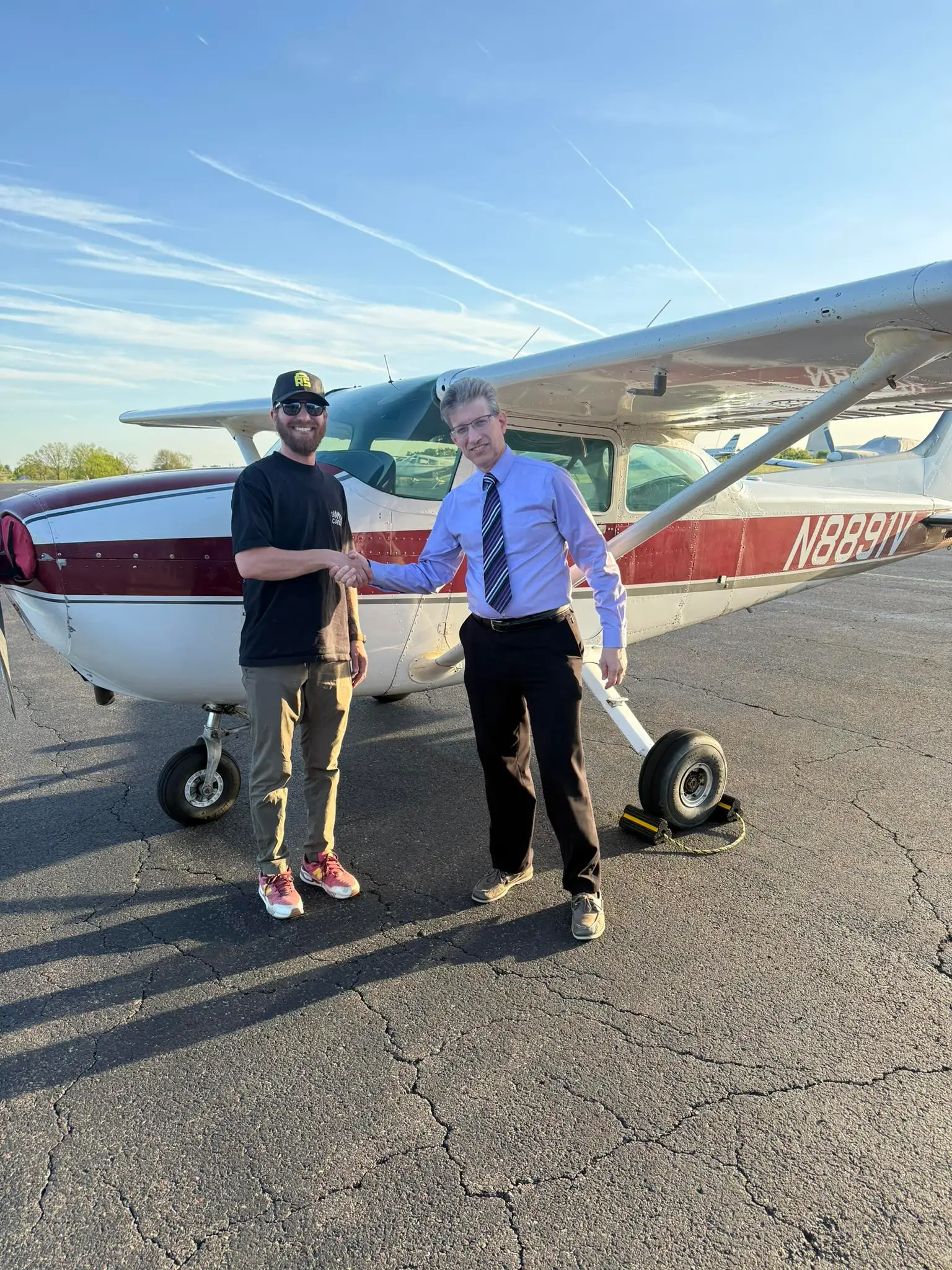
People often ask straightforward questions with surprising answers. How many days is 1500 hours? What time is 1500 hours? Why does this specific number matter so much to pilots?
At Pitcairn Flight Academy, we guide students from their first flight all the way to their airline career. Let’s break down:
1500 Hours is How Many Days? The Simple Math
Let’s get the simple calculation out of the way first. If you’re wondering how many days is 1500 hours, the answer is:
1500 hours ÷ 24 hours per day = 62.5 days.
That’s just over two months of continuous. While it’s a simple conversion, it helps frame the sheer volume of experience this number represents. No pilot flies for 62.5 days straight, but accumulating that much time in the cockpit is a testament to their dedication.
What Time is 1500 Hours? The Aviation Answer
Here’s a question that often separates pilots and military personnel from everyone else. In aviation, time is almost always kept using the 24-hour clock to avoid any confusion between A.M. and P.M.
So, what time is 1500 hours?
1500 hours is 3:00 PM.
Pilots would read this as “fifteen hundred hours.” This precise and unambiguous way of telling time is critical for flight planning, air traffic control communication, and coordinating operations across different time zones.
Why 1500 Hours is the Magic Number for Pilots
Now for the most important question: why is this number the gatekeeper to an airline career?
The “1500-Hour Rule” refers to the Federal Aviation Administration (FAA) requirement that a pilot must have a minimum of 1,500 flight hours to earn an Airline Transport Pilot (ATP) certificate. This certificate is the highest level of pilot license and is required to act as a pilot for a U.S. commercial airline.
This rule was established in 2013 to ensure that pilots entering the airline industry have a deep well of experience before being responsible for the lives of passengers. It’s not just about the quantity of hours but the quality of experience gained across different flight conditions and scenarios.
Breaking Down the 1,500 Hours
To qualify for an ATP certificate, a pilot’s 1,500 hours must include specific types of experience:
- 500 hours of cross-country flight time
- 100 hours of night flight time
- 75 hours of instrument time (flying solely by reference to instruments)
- 250 hours as Pilot in Command (PIC)
For a complete breakdown, check out our detailed guide: What is the 1500 Hour Rule?.
Are There Exceptions? The Restricted ATP (R-ATP)
The FAA does allow for some exceptions, which let pilots earn a “Restricted” ATP with fewer hours. These pathways recognize the value of structured training:
- Military Pilots: Can qualify with 750 hours.
- 4-Year Aviation University Graduates: Can qualify with 1,000 hours.
- 2-Year Aviation College Graduates: Can qualify with 1,250 hours.
However, for the vast majority of civilian pilots training at schools in Pennsylvania, the 1,500-hour goal remains the standard.
How Do You Get to 1500 Hours?
The journey from a new student pilot to 1,500 hours is a multi-year process. After earning a Commercial Pilot Certificate at around 250 hours, pilots need to build the remaining 1,250 hours.
The most common and effective strategy is to become a Certified Flight Instructor (CFI). This allows you to get paid to fly, share your passion, and build hours quickly. A full-time CFI at a busy school can log 80-100 hours per month, making it the fastest way to reach the 1,500-hour milestone.
To learn more about the timeline, read our post: How Long It Takes to Be an Airline Pilot in Pennsylvania.
Frequently Asked Questions
What is the cheapest way to get 1500 hours? The cheapest way is to get paid while you fly. Becoming a CFI is the most reliable and cost-effective path because you are earning an income while building hours.
Can I get 1500 hours in a year? It’s nearly impossible to go from zero to 1500 hours in a single year. A more realistic timeline for a dedicated, full-time student is 18-24 months.
Does simulator time count toward the 1,500 hours? Yes, but with limitations. The FAA allows a certain amount of time in approved simulators to count toward specific ratings and total time, but the vast majority must be in an actual aircraft.
The path to getting there is a marathon, not a sprint, but with the right strategy and a supportive flight school, it is an achievable and incredibly rewarding goal.
Ready to start logging your first hour? Book a Discovery Flight at Heritage Field and let’s map out your journey to 1500 hours and beyond.